


Few mechanisms within pedigree organizations carry as much long-term impact as the Novice Class — and few are discussed so superficially.
On paper, the system appears simple. A cat without a registered pedigree may be exhibited once in Novice Class, evaluated by two judges, receive an “Excellent” qualification with at least 88 points, and — if approved — enter the breed as generation zero in RIEX. After four generations, its descendants move into the main studbook as LO cats.
Administratively, this looks structured.
Genetically and strategically, however, it is far more powerful than it appears.
Because the Novice Class is not just an exhibition category. It is an entry point into the genetic future of a breed.
The long-term genetic consequences of collective decisions were previously examined in The Popular Sire Effect, while the broader question of how rules shape responsibility was explored in Education vs. Rules. The Novice Class sits precisely at the intersection of these two dimensions.
Why the Novice Class Exists — and Why It Must
Before raising concerns, we must acknowledge something essential: the Novice Class is not a mistake. It exists for legitimate and sometimes necessary reasons.
This essay is also available as a short video lecture. The full written version continues below.
Certain breeds operate with a very limited gene pool. In such cases, controlled introduction of new bloodlines may be crucial for long-term health and sustainability. Natural breeds originating from specific geographic regions may still have foundation animals outside formal pedigree systems. Breeds with approved outcross programs require a structured pathway to reintegrate offspring correctly into the target breed.
In these contexts, the Novice Class is not a loophole. It is a safeguard.
Without it, some breeds would risk genetic stagnation.
But a safeguard only works if it is used carefully.
When a Genetic Tool Becomes an Administrative Shortcut
The problem does not begin with the rule itself. It begins when the mechanism designed to preserve diversity becomes a shortcut for bypassing responsibility.
In recent years, several major associations have faced waves of falsified pedigrees, particularly in highly popular breeds such as Ragdolls and British Shorthairs. Some associations have responded by cancelling such pedigrees and prohibiting further breeding from those lines.
What happens then?
Owners of affected cats often seek an alternative path. If another system allows entry through Novice evaluation, the pedigree can effectively be “reset.” The cat re-enters as RIEX 0. Four generations later, its descendants appear in LO. The previous history fades from visible records.
Technically legal. Structurally correct.
But genetically clarified? Not necessarily.
When Novice is used to solve unresolved pedigree problems rather than to strengthen genetic diversity, it becomes something very different from what it was intended to be.

The Economic Dimension We Cannot Ignore
There is another uncomfortable reality.
Backyard breeding exists in every region. Cats of uncertain origin — sometimes without any documentation, sometimes deliberately bred outside association rules — are sold as recognizable breeds at a fraction of the price of responsibly registered breeding stock.
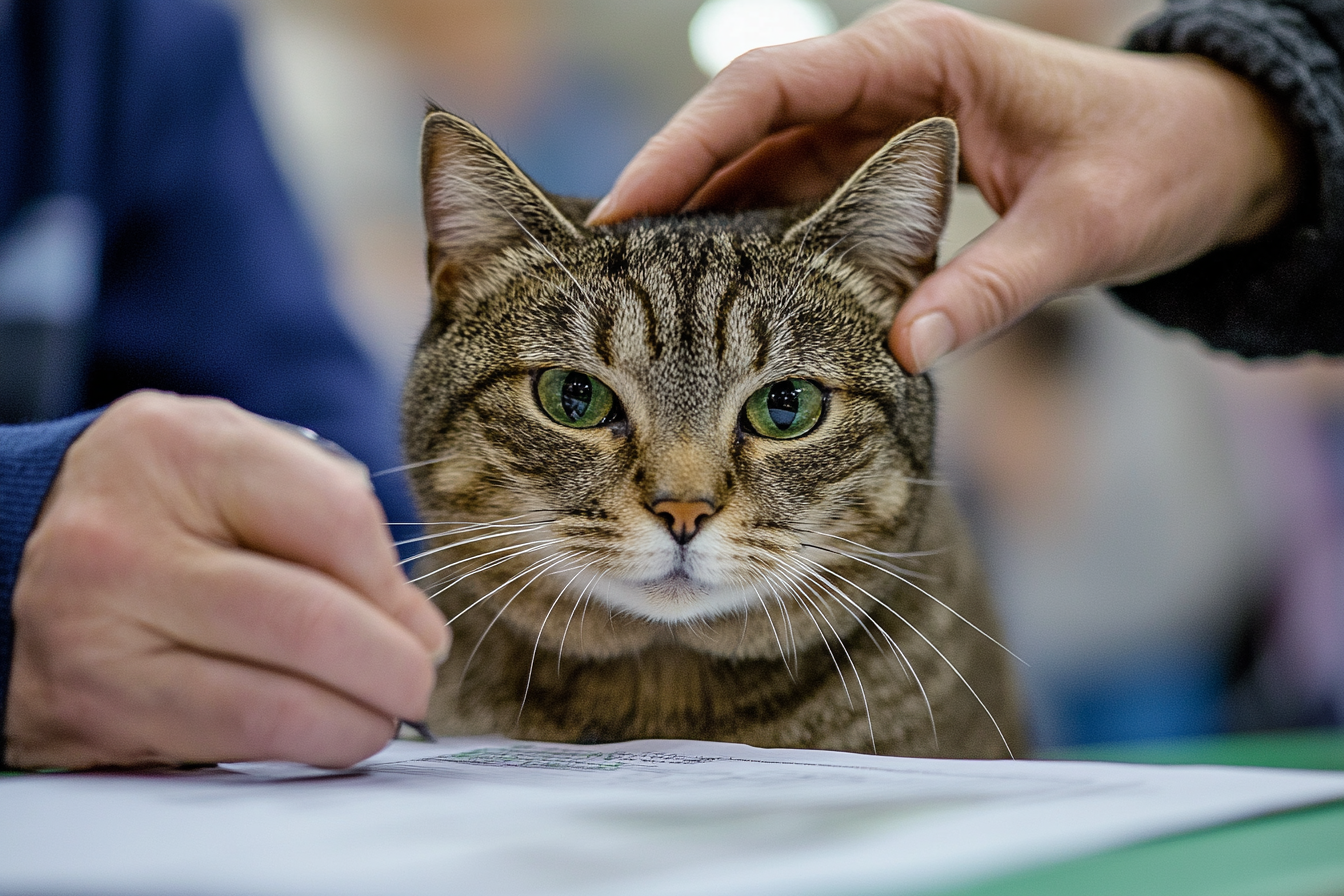
A buyer may purchase such a cat inexpensively and later decide to breed. The Novice Class suddenly becomes attractive. A single evaluation, a qualifying score, two signatures — and a previously undocumented cat enters the formal breeding system.
In large, well-established breeds with broad international gene pools, there is rarely a genetic necessity for such introductions. The justification is often not preservation but convenience.
If entering a breed through Novice becomes easier than following established breeding and registration standards, responsible breeders are effectively penalized for doing things correctly.
That sends the wrong signal.
Not All Breeds Are the Same
The Novice Class cannot be evaluated in isolation from breed context.
In small populations, especially those under genetic pressure, controlled admission may be responsible and even necessary. In breeds where outcross programs are permitted, Novice evaluation may serve as a structured reintegration step for offspring initially registered in experimental or unrecognized categories.
In these cases, the mechanism supports long-term health.
But in highly populated breeds with extensive global representation, the threshold for Novice acceptance should be significantly higher. Introducing unknown or insufficiently documented bloodlines into such breeds does not strengthen them. It introduces variables without clear benefit.
The key question should always be: Is this genetically necessary?
If the answer is no, caution becomes the responsible position.
The Irreversibility of the Decision
Once a cat is accepted as RIEX 0, the decision cannot truly be undone.
Four generations later, the descendants become indistinguishable within the main studbook. Future breeders will not see the original circumstances. Judges will not evaluate the initial reasoning. The genetic impact remains, but the context disappears.
The Novice decision is therefore not temporary. It shapes the breed for decades.
This is precisely why the evaluation cannot be reduced to visual conformity alone.
A cat may look convincingly like a breed. That does not automatically mean its introduction strengthens the breed’s long-term stability.
The Limits of the Judge’s Evaluation
The rules require two judges to evaluate and sign.
Judges are trained to assess type, structure, balance, condition, and conformity to standard. They can determine whether a cat visually corresponds to a breed description.
What they cannot determine is full genetic background. They cannot verify ancestry beyond what is presented. They cannot reconstruct breeding conditions or confirm the ethical framework behind the animal’s origin.
For this reason, the Novice evaluation must never be treated as a purely cosmetic assessment. It requires serious involvement of the breeding committee, a detailed written explanation, and genuine scrutiny of circumstances.
If the written justification consists only of “The cat has no pedigree,” then the system is not functioning as intended.
The Novice Class was not created to compensate for missing paperwork. It was created to serve breed integrity.
The Risk of Financial Motivation
In some regions, Novice entries represent significant income for clubs. High fees, simplified procedures, and minimal questioning can create an environment where economic benefit outweighs genetic caution.
This is understandable from an organizational perspective — but dangerous from a breeding perspective.
Genetics does not adapt to financial convenience. Breeds are shaped slowly, often invisibly, through accumulated decisions.
A single Novice acceptance may seem minor. Over time, repeated decisions define the direction of a breed.
The Strategic Question Behind the Rule
At its core, the debate about the Novice Class is not about abolishing it.
It is about understanding what pedigree registration represents.
If pedigree systems are treated as technical formalities, then Novice becomes simply another administrative pathway.
If pedigree systems are treated as long-term commitments to transparency and genetic responsibility, then Novice becomes a carefully guarded gate.
The rule itself is not the danger.
The danger lies in inconsistent interpretation.
Education Before Restriction
The solution is not to remove the Novice Class. In certain contexts, it remains necessary and valuable.
But clarity, consistency, and education are essential.
Breeding committees must fully understand the genetic implications of acceptance. Judges must be aware that their signature carries multi-generational consequences. Clubs must apply age limits and procedural requirements strictly. Written justifications must be meaningful, not symbolic.
Most importantly, the system must not reward those who bypass responsible breeding structures while disadvantaging those who respect them.
The Novice Class can protect breeds.
It can also quietly reshape them.
Whether it becomes a rescue tool or a genetic backdoor depends not on the wording of the rule — but on the seriousness with which we apply it.
And that seriousness begins with understanding.

Written by Trpimir-Frane Sulić
President of Felis Croatia (KMFC)
WCF Judge
