


Judging a cat on the table is one of the most visible and most misunderstood moments in the cat fancy. From the outside, it can look deceptively simple: a judge lifts a cat, examines it, asks a few questions, writes a report, and moves on. From the inside, it is anything but simple. Every decision made on that table carries weight — not only for the exhibitor standing in front of us, but for the breed, the show, and the trust that holds the entire system together.
Judging is not about ticking boxes, nor is it about searching for perfection. It is about evaluation, interpretation, communication, and responsibility — all happening within a few minutes, with a living animal that may or may not cooperate, and a human on the other side of the table who deeply cares about the outcome.
The interpretative foundations of judging were examined in How We Read Breed Standards, while the broader ethical responsibility of judges was discussed in Judging Responsibility. This essay moves from theory to practice — focusing on what actually happens at the table.
Judging Is Evaluation, Not Inspection
A judging table is not a veterinary exam table, and it is not an audit. The goal is not to “find something wrong,” but to understand the cat as a whole. Standards describe ideals, not absolutes. Almost every cat has imperfections; what matters is how those imperfections affect balance, function, and overall quality.
This essay is also available as a short video lecture. The full written version continues below.
When judging becomes inspection-driven rather than evaluation-driven, priorities shift in unhealthy ways. Minor deviations can be magnified, while harmony, structure, and breed character fade into the background. A cat should never be reduced to a list of faults without context. Faults exist within a system of proportions and relationships, and it is the judge’s role to understand how much they truly matter.
This is where experience, not checklists, becomes decisive.
Touching the Cat: Technique, Respect, and Information
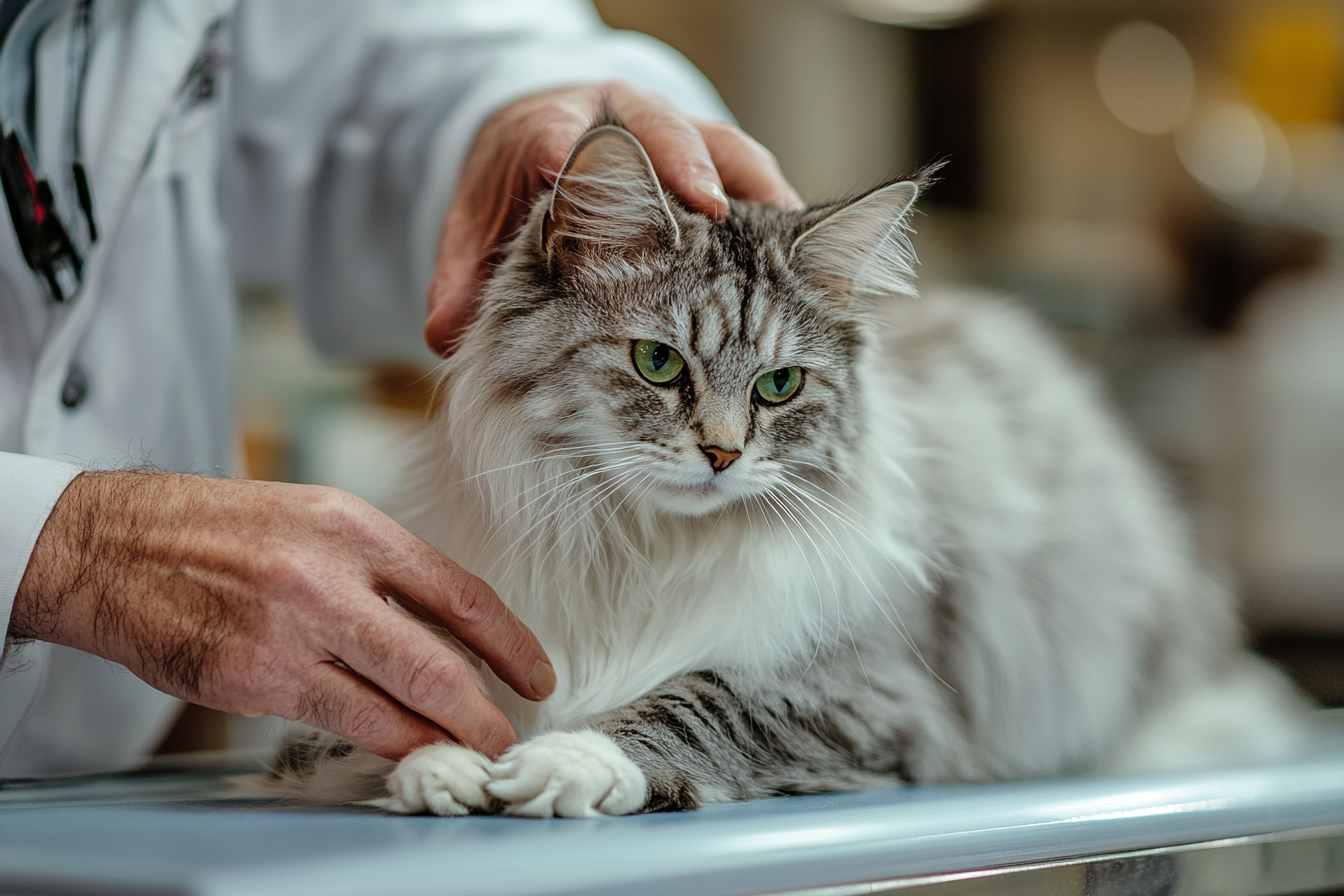
How a judge touches a cat matters as much as what is being checked. A confident, calm, and predictable touch communicates safety. A rushed, hesitant, or overly forceful approach creates tension immediately — not only in the cat, but in the exhibitor watching closely.
Touching is not about asserting authority. It is about gathering information efficiently and respectfully. Structure, bone, muscle tone, tail, bite, testicles, coat texture, and condition all require hands-on evaluation, but none of them require roughness or haste. A cat that feels secure will often allow a more complete examination than one that feels threatened.
Good judges adapt their handling to the cat in front of them. Kittens are not adults. Seniors are not young adults. Nervous cats are not aggressive cats. Understanding the difference is part of professional judgment.

Condition Matters — But It Is Not Everything
Cat shows are not beauty contests in the superficial sense, but presentation and condition are part of evaluation. A cat in poor coat condition, dehydrated, overweight, underweight, or poorly prepared cannot be judged as if these factors are irrelevant. Condition reflects care, management, and respect for the show.
At the same time, condition must never override structure, health, or breed correctness. A perfectly groomed cat with serious structural weaknesses should not automatically outrank a well-built cat with a slightly less polished coat. Balance is key.
Judging condition is not about punishing exhibitors. It is about setting expectations and encouraging responsible preparation.
Explaining, Not Judging the Person
Exhibitors pay to show their cats, and with that comes a legitimate expectation: feedback. They are not paying only for a title or a score, but for professional evaluation. This does not mean every exhibitor expects praise, but they do expect clarity and respect.
Choosing the right words is part of judging. An exhibitor loves their cat. That love deserves acknowledgment, even when pointing out imperfections. Clear, neutral language focused on the cat — not the breeder or owner — maintains trust. “This cat shows…” is very different from “You did…” or “You should have…”
A judge who explains well educates without lecturing. Even a disappointing result can be accepted when it is understood.
Faults, Titles, and the Weight of Refusal
One of the most sensitive moments in judging is the decision to give or refuse a title. Refusing a title is never trivial. It carries emotional weight and financial implications. Exhibitors often feel that a refusal means they “paid for nothing,” even when the decision is correct.
This is why refusals must be justified by serious, relevant issues — not by personal taste or marginal preferences. A title should not be refused lightly, but it should not be given automatically either. The standard sets expectations, and judges are guardians of those expectations.
Being strict does not mean being harsh. Being lenient does not mean being careless. Professional judging lives in the space between these extremes.
Nervous and Aggressive Cats: Reading the Situation
Not every cat is comfortable on the judging table. Some are nervous, some are fearful, some are overstimulated. It is the judge’s responsibility to distinguish between discomfort and aggression, and to act accordingly.
Calming techniques — slower movements, lower voices, minimizing unnecessary handling — often make a significant difference. Sometimes, a brief pause is more effective than continuing immediately. Sometimes, stopping is the right decision.
A cat show should never become a test of endurance for the animal. Safety always comes first — for the cat, the judge, and the stewards. How a judge handles these situations is remembered long after the show ends.
Strictness, Consistency, and Fairness
Judges are often asked whether they should be “strict.” The better question is whether they should be consistent. Strictness without consistency feels arbitrary. Consistency without understanding becomes rigidity.
A cat judged today should be judged by the same principles tomorrow. This does not mean identical outcomes — cats differ — but it does mean stable interpretation. Exhibitors accept decisions more easily when they sense coherence rather than unpredictability.
Consistency builds trust. Trust sustains the show system.
The Table as a Place of Responsibility
The judging table is where standards become reality. It is where written descriptions meet living animals. It is where breeders see the consequences of their decisions, and where trends either accelerate or stop.
Every award reinforces an interpretation. Every refusal draws a boundary. Judges may not set out to shape the future of breeds, but they inevitably do — one cat at a time.
Judging is not neutral. It is interpretative leadership.
Conclusion: What Actually Matters
Judging well is not about knowing more rules. It is about knowing how to apply them with understanding, empathy, and responsibility. It is about balancing correctness with communication, evaluation with explanation, firmness with respect.
What matters most on the table is not perfection, nor spectacle, nor pressure. What matters is clarity — for the cat, for the exhibitor, and for the breed.
When judges judge thoughtfully, everyone benefits: exhibitors learn, breeders improve, and cats are treated with the respect they deserve. That is what keeps shows meaningful — and that is what makes judging a profession, not just a role.

Written by Trpimir-Frane Sulić
President of Felis Croatia (KMFC)
WCF Judge
